
HR Manager roles sit at the point where business priorities and people decisions meet. An HR Manager runs the day-to-day people function, making sure policies, processes, managers, and employee support all work together in a way that helps the organisation perform properly. In practice, that means the work is rarely abstract. It shows up in recruitment choices, policy calls, manager behaviour, team structure, employee experience, and how confidently an organisation responds when something starts to wobble. A strong HR Manager helps turn people management from a reactive headache into something more deliberate, more credible, and honestly more useful.
For job seekers, the appeal of HR Manager work is that it combines human judgement with business reality. You are not only dealing with policy or paperwork. You are helping managers make better calls, employees understand what is fair, and leadership teams see the long-term effect of short-term decisions. In many organisations, a capable HR Manager becomes one of the people others rely on when issues are sensitive, time is short, and the easy answer is probably the wrong one.
It can suit graduates, HR professionals moving up, experienced administrators wanting broader ownership, or career changers coming from operations, customer service, project work, or management. The common thread is usually the same: good judgement, strong organisation, and an interest in how workplaces actually function. good for someone who enjoys leading an HR team, improving people processes, and being the point of escalation for tougher workforce decisions. The salary picture can be attractive too. Based on roles tracked in the Jobs247 salary database over the past year, HR Manager vacancies currently cluster around a range of **£45,500 – £71,500**, with a midpoint of about **£58,500**.
The Role of a HR Manager
An HR Manager is there to make people decisions more effective, more consistent, and less risky. Depending on the employer, that can lean strategic, operational, analytical, or advisory, but the real purpose stays quite steady: help the organisation make sound choices about its workforce and help the workforce understand how those choices are being made.
That usually means working across managers, employees, senior leaders, and other HR specialists rather than operating in isolation. A good HR Manager spots patterns early, asks sharper questions than everyone else in the room, and turns policy or data into action that feels realistic. The role matters because people problems rarely stay neatly inside HR. They hit service, cost, culture, retention, and reputation sooner or later.
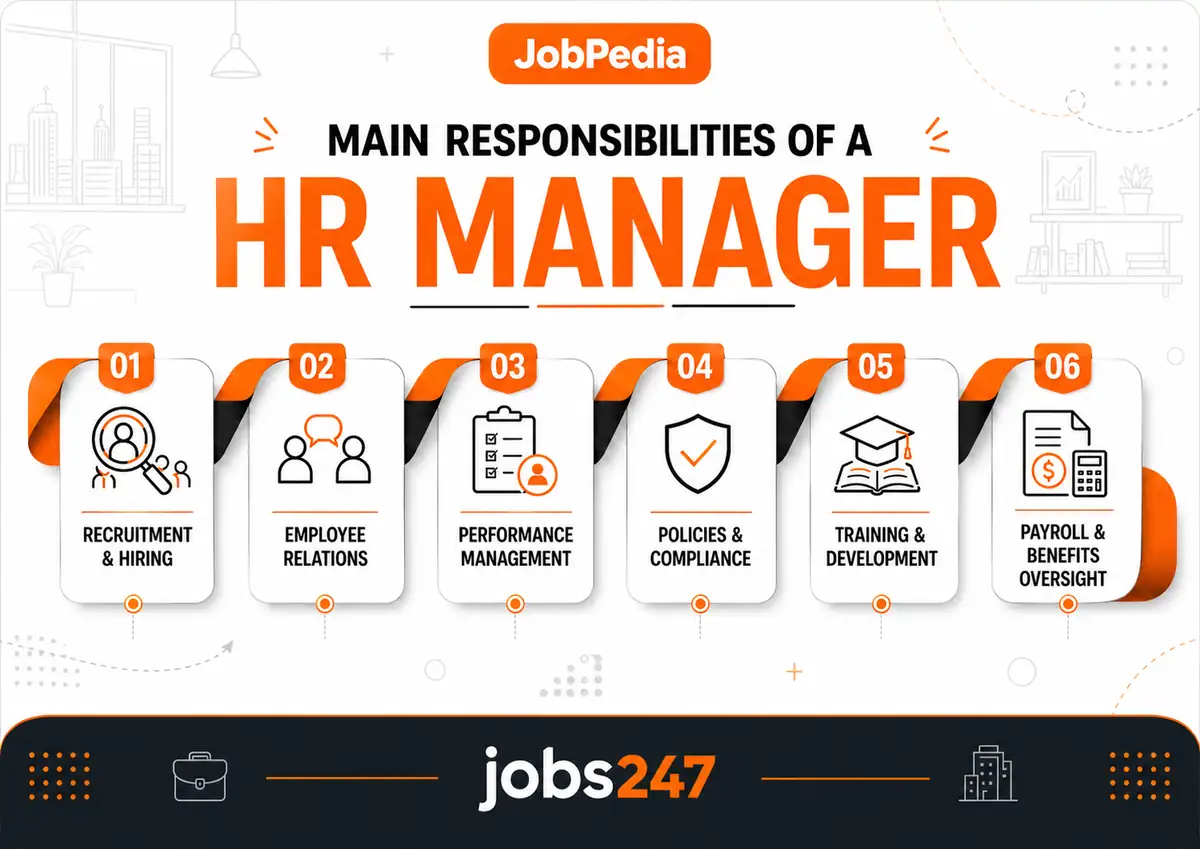
Main Responsibilities of a HR Manager
The responsibility mix varies by employer, but most HR Manager roles revolve around judgement, coordination, and making sure people decisions support wider organisational goals.
- manage daily HR operations across recruitment support, employee relations, absence, performance, and policy
- lead or supervise HR staff so service quality stays consistent and work is prioritised properly
- advise managers on sensitive cases including conduct, capability, grievance, and restructuring matters
- review people policies and improve processes that are slow, unclear, or too manual
- support senior leaders with workforce planning, retention, and capability concerns
- monitor HR metrics such as turnover, sickness, and vacancy progress to spot operational pressure points
- work with payroll, finance, and operations teams so people processes align with wider business delivery
- oversee onboarding, probation, and employee lifecycle administration at a reliable standard
- help deliver engagement, learning, and culture initiatives that improve experience and performance
- balance legal compliance with practical decision making so managers are supported without becoming dependent
Taken together, those responsibilities show why an HR Manager has business value beyond the HR department. Good work in this role protects time, reduces avoidable conflict, improves manager confidence, and helps organisations make better choices before problems become expensive.
A Day in the Life of a HR Manager
An HR Manager’s day can be packed. You may review a grievance in the morning, brief a manager on a performance issue before lunch, check progress on hiring, then meet senior leaders on turnover or restructuring in the afternoon. The role sits right between strategy and execution. It needs enough detail awareness to keep processes sound, but enough perspective to see where the business is heading next.
Where an HR Manager Works
HR Manager roles can be found in many different organisations, but they are most common where people complexity is high enough that managers need structured support rather than occasional advice.
- medium and large employers with active people agendas and multiple managers needing support
- operational sectors such as retail, logistics, hospitality, and care where employee relations volume can be high
- public sector and regulated organisations where process discipline matters
- professional services firms balancing policy, culture, and performance expectations
- hybrid teams where HR leaders need to support both in-person and remote management practice
- growing businesses that need stronger HR structure without becoming overly bureaucratic
Skills Needed for HR Manager Work
HR Manager Hard Skills
Technical credibility matters in HR Manager work because people tend to notice quickly when advice sounds vague or disconnected from reality.
- employee relations case management, because escalation often lands with the manager-level HR role
- policy development and implementation, because a policy is only useful if it works in practice
- team leadership, because the role often involves guiding coordinators, advisors, or generalists
- process improvement, because time-wasting admin drags down the whole function
- workforce reporting, because operational HR decisions should be backed by trend data
- employment law knowledge, because sound judgement depends on technical understanding
HR Manager Soft Skills
The strongest HR Manager professionals are not just technically sound. They are also effective with people, especially when the issue is awkward, time-sensitive, or politically sensitive.
- leadership, because the role sets the tone for the HR team and for manager trust
- calmness, because people issues often arrive with emotion and urgency attached
- decisiveness, because delayed HR calls can worsen employee situations
- fairness, because credibility depends on consistency and good judgement
- communication, because policy and case guidance must be clear and usable
- boundary setting, because helpful HR support should not become manager dependency
Education, Training, and Qualifications
There is no single route into HR Manager work, which is part of the reason the field attracts people from different backgrounds. Some arrive through HR administration, some through operations, and others through analytics, management, or specialist people roles. What matters most is whether you can combine sound process knowledge with practical judgement.
- degrees in human resources, business, psychology, law, sociology, analytics, or management can all be useful, though they are not always mandatory
- CIPD study is valued by many UK employers because it shows structured understanding of people practice and employment issues
- short courses in employment law, data analysis, systems, employee relations, or change management can strengthen a profile depending on the role
- hands-on experience with onboarding, case support, reporting, policy drafting, systems administration, or manager coaching often counts heavily
- transferable backgrounds from administration, customer operations, leadership support, project coordination, finance, or service management can translate well when combined with good workplace judgement
For many candidates, a mixed profile works best: some formal learning, some operational exposure, and some evidence that you can handle sensitive information with care. People move into HR Manager positions through apprenticeships, internal progression, graduate routes, and sideways moves more often than outsiders expect.
How to Become an HR Manager
There is no one perfect route, but these steps tend to help people move into HR Manager work with more confidence.
- Build a foundation in people, operations, or business support work so you understand how workplaces run in real life, not just on paper.
- Learn the basics of employment practice, policy, and manager support. For many people, that means entry-level HR work, structured training, or both.
- Develop evidence of judgment. Employers hiring for HR Manager roles want more than admin accuracy; they want signs you can interpret situations well.
- Get comfortable with systems, reporting, and written communication because most HR Manager roles depend on documentation and clear reasoning.
- Take on broader projects or more complex cases as soon as you can, especially work that shows ownership rather than simple task completion.
- Translate your experience into outcomes when you apply. Hiring managers respond well to examples showing improved process, better decisions, fewer errors, stronger manager support, or clearer workforce insight.
HR Manager Salary and Job Outlook
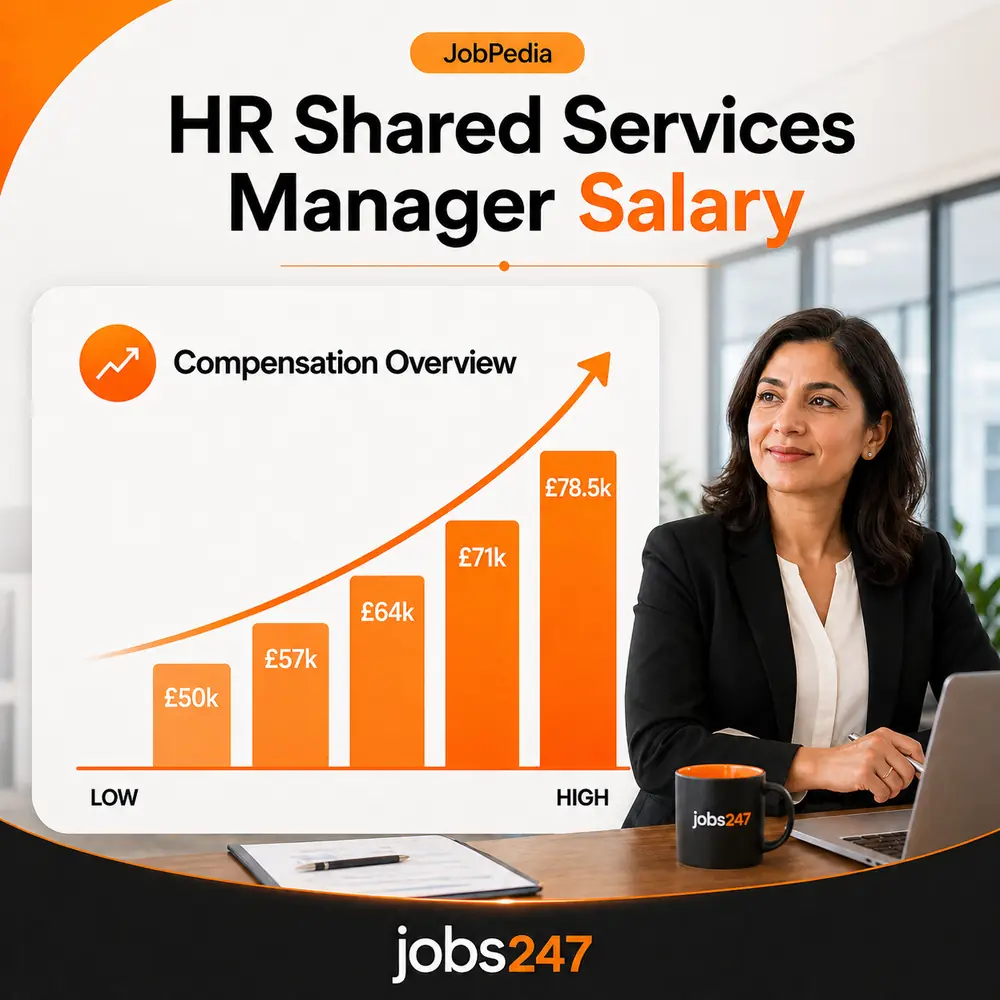
For HR Manager roles, pay usually moves with scope, complexity, sector, and seniority. A smaller organisation may expect one person to cover a very broad remit, while a larger employer may pay more for deeper expertise, bigger risk, or leadership responsibility. Based on Jobs247 salary data drawn from vacancies tracked over the past year, the current market range for HR Manager is about **£45,500 – £71,500**, with a midpoint near **£58,500**. That does not guarantee what one employer will offer, but it is a useful market-level guide.
Location matters too, especially in London and other large commercial centres. So do union presence, regulation, systems maturity, and whether the role carries people leadership, transformation work, or specialist risk. Someone working in a broad advisory post may see a different pay ceiling from somebody leading a service team or managing board-level workforce issues.
For readers comparing the role with wider UK guidance, the National Careers Service overview of human resources officer work gives a helpful baseline on entry routes and day-to-day expectations. That is useful because many HR Manager jobs sit inside the same wider HR ecosystem, even when the title signals a specialist or more senior angle.
Outlook remains solid for employers that need better manager support, stronger workforce data, cleaner process, and more credible people decisions. Organisations are under pressure to hire well, retain key staff, manage cost, and deal with employee expectations more carefully than before. Those pressures do not disappear in slower markets. They just change shape. For a second UK perspective, the Prospects job profile for human resources officer is worth reading for its overview of responsibilities and routes into the profession.
In practical terms, that means a capable HR Manager should continue to find opportunities, especially if they can combine technical confidence with business understanding. The strongest candidates tend to be the ones who can explain not only what happened, but why it mattered and what improved because of their involvement.
HR Manager vs Similar Job Titles
Titles in people and HR work overlap a lot, which can make job ads confusing. Looking at the real focus of the role is usually more useful than obsessing over wording alone. Here are a few of the closest comparisons for HR Manager.
HR Manager vs HR Director
an HR Director sits at a more strategic and executive level, while an HR Manager usually owns the operational heart of the function.
- Main focus: HR Manager work centres on its own remit, while HR Director work shifts attention towards that role’s specific priorities.
- Level of responsibility: the balance between strategic influence, operational ownership, and specialist depth is usually different.
- Typical work style: HR Manager roles often involve a particular mix of meetings, analysis, process work, and stakeholder support that does not map exactly onto HR Director.
- Best fit for: people should usually choose between the two based on whether they prefer broader ownership, deeper specialism, more leadership, or more technical work.
That distinction matters when you are applying. A candidate can be strong and still miss out if they pitch themselves like a HR Director when the employer really needs a HR Manager.
HR Manager vs HR Business Partner
an HR Business Partner spends more time advising leaders strategically, while an HR Manager often holds more direct ownership of service delivery.
- Main focus: HR Manager work centres on its own remit, while HR Business Partner work shifts attention towards that role’s specific priorities.
- Level of responsibility: the balance between strategic influence, operational ownership, and specialist depth is usually different.
- Typical work style: HR Manager roles often involve a particular mix of meetings, analysis, process work, and stakeholder support that does not map exactly onto HR Business Partner.
- Best fit for: people should usually choose between the two based on whether they prefer broader ownership, deeper specialism, more leadership, or more technical work.
That distinction matters when you are applying. A candidate can be strong and still miss out if they pitch themselves like a HR Business Partner when the employer really needs a HR Manager.
HR Manager vs People Operations Manager
a People Operations Manager may be more process and systems focused, while an HR Manager often covers broader manager support and casework.
- Main focus: HR Manager work centres on its own remit, while People Operations Manager work shifts attention towards that role’s specific priorities.
- Level of responsibility: the balance between strategic influence, operational ownership, and specialist depth is usually different.
- Typical work style: HR Manager roles often involve a particular mix of meetings, analysis, process work, and stakeholder support that does not map exactly onto People Operations Manager.
- Best fit for: people should usually choose between the two based on whether they prefer broader ownership, deeper specialism, more leadership, or more technical work.
That distinction matters when you are applying. A candidate can be strong and still miss out if they pitch themselves like a People Operations Manager when the employer really needs a HR Manager.
Is a Career as an HR Manager Right for You?
A career in HR Manager can be rewarding, but it suits a certain kind of temperament. The work matters because workplaces are full of messy human decisions. If you like turning that mess into something clearer and more workable, the role can be a very good fit.
- This role may suit you if you like work that mixes people judgement with business or operational reality.
- This role may suit you if you can handle confidential information sensibly and do not panic when conversations become awkward.
- This role may suit you if you enjoy solving workplace problems in a way that is practical rather than theatrical.
- This role may suit you if you want a role where communication, structure, and credibility really matter.
- This role may suit you if you are interested in how organisations perform, not just how policies are written.
- This role may suit you if experienced HR practitioners ready to lead a team or function area.
- This role may suit you if people who can combine policy knowledge with practical judgement.
- This role may not suit you if you strongly prefer work with very little ambiguity or people interaction.
- This role may not suit you if you dislike documenting decisions, following process, or dealing with sensitive issues carefully.
- This role may not suit you if you want a job that stays the same from week to week with minimal interruptions.
- This role may not suit you if you do not enjoy balancing competing views from managers, employees, and leadership.
- This role may not suit you if you are looking for a role that is purely analytical or purely administrative with no judgement calls.
Final Thoughts
HR Manager is one of those roles that can look simple from the outside and much more complex once you are in it. The title may suggest policy or process, but the real job is usually about judgement, timing, and helping organisations deal with people matters in a more competent way. That is why strong performers are valued. They make managers steadier, employees better supported, and decisions more coherent.
For anyone considering the move, the biggest question is not whether you know every rule already. It is whether you can learn quickly, communicate clearly, and handle responsibility with a bit of backbone. If that sounds like you, HR Manager can offer a solid career path with room to specialise, lead, or broaden out over time.
[/jp_faqs]