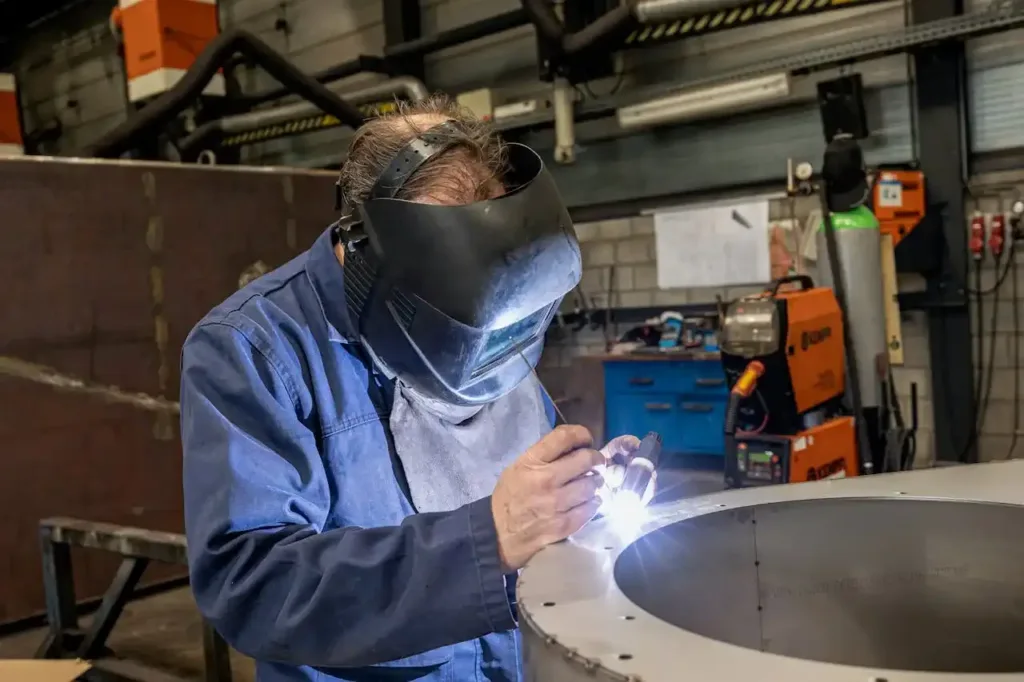
A Welder is the person people rely on when there needs to be a calm pair of hands, a practical fix and a result that holds up once the pressure is on. Joins and repairs metal parts safely and accurately so equipment, buildings and infrastructure hold together the way they should.
That matters because the job affects more than one task on a checklist. It influences trust, speed, cost, quality and how confident other people feel about what comes next. In practical terms, a welder is often the person who keeps the detail from slipping, the pace from dragging and the outcome from becoming guesswork. That makes the job useful in a very direct way.
It can suit school leavers, career changers and experienced workers moving sideways from related jobs. If you like useful work, clear responsibilities and seeing the effect of your effort, it is worth a proper look.
What Does a Welder Do?
Welder work usually blends judgement, routine and communication. Part of the job is technical or process-led, but another part is human: understanding what the situation needs, what the rules allow and what the other person will need next.
There is usually a steady rhythm to the job, even though the details change. You review information, decide what matters most, act on the next step and keep the record straight so other people can follow the thread without starting over.
A good welder does more than complete tasks. They prevent avoidable problems, spot risks early and save time for the rest of the team by being accurate the first time round.
The role often rewards people who can stay clear-headed when things are a bit messy. That may mean choosing between priorities, dealing with interruptions or explaining the same point in a simpler way so work can keep moving.
That mix is what makes the role more substantial than it can look from the outside. Employers are not just buying time. They are buying steadiness, usable judgement and someone who can be trusted with work that affects other people, deadlines or outcomes.
Main Responsibilities of a Welder
The exact list changes by employer, but most welder jobs revolve around a familiar set of responsibilities.
- Handle the core day-to-day work with accuracy, pace and a clear sense of priority.
- Check information, measurements, records, customer details or case notes before acting.
- Use the right systems, tools, procedures or equipment for the task at hand.
- Spot issues early and raise them before they become delays, defects or repeat contact.
- Keep records clear enough that another colleague can follow the case, task or job without confusion.
- Communicate with customers, supervisors, colleagues, suppliers or partner teams in plain language.
- Work safely and in line with the rules that shape the role, whether that is compliance, process control or physical safety.
- Help maintain standards of service, quality, productivity or workmanship over time rather than only on good days.
When those responsibilities are handled properly, the business gets more than a completed task. It gets fewer mistakes, smoother handovers, better customer trust and less wasted time correcting avoidable problems.
A Day in the Life of a Welder
A typical day rarely starts with the dramatic part. It usually starts with checks: what is due, what changed overnight, what needs follow-up first, and which issue could create the most trouble if ignored.
From there, the day becomes a mix of direct work and coordination. Some tasks can be handled straight away, while others need information from systems, colleagues, customers or suppliers before a sound decision can be made.
By the middle of the day, priorities often shift. New requests come in, deadlines move, or a problem that looked minor begins to grow. This is where a solid routine helps because it stops the day from getting dragged completely off course.
Late in the day, the focus turns back to handover and accuracy. Good notes, clear updates and unfinished actions that are properly logged make the next day easier and reduce repeat effort.
That rhythm is one reason the job suits people who like momentum but still care about detail. The work can be lively without becoming pure chaos, provided the basics are done well.
Where Does a Welder Work?
Where a Welder works depends on the employer and the service model, but the role usually sits close to the point where people, process and accountability meet.
- fabrication workshops producing structural steel, gates, frames and bespoke parts
- construction sites where steel sections, staircases or pipework are installed
- factories and plants carrying out maintenance, repair and shutdown work
- shipyards, transport depots and engineering firms working on vehicles or heavy equipment
- mobile jobs where welding is done on client sites rather than in one workshop
Some roles are strongly site-based or branch-based. Others can be hybrid. What changes less is the need for somebody who can keep work controlled, understandable and dependable from one day to the next.
Skills Needed to Become a Welder
Hard Skills
The technical side of the job depends on the field, but employers usually look for proof that you can do the practical work cleanly rather than just talk about it.
- MIG, TIG and arc welding techniques: Different materials and thicknesses call for different methods, and employers value people who know when to switch process rather than forcing one method onto every task.
- Reading technical drawings: A welder who can work from measurements, symbols and tolerances makes fewer mistakes and wastes less steel, filler and workshop time.
- Metal preparation and finishing: Cutting, grinding, cleaning and checking joints before and after welding has a big effect on strength, appearance and compliance.
- Safe equipment handling: Weld sets, gas cylinders, extraction systems and PPE all need disciplined use; sloppy habits can injure the welder and everyone nearby.
- Quality inspection: Being able to spot poor penetration, distortion or contamination early stops a small defect turning into a failed job later.
Soft Skills
The softer side matters just as much because this work usually touches other people, shifting priorities or situations where poor communication makes everything harder.
- Patience: Good welding is rarely rushed. Careful set-up and repeatable technique matter more than showing off speed.
- Concentration: A short lapse can ruin a joint or create a safety risk, especially when working to tight tolerances.
- Reliability: Workshops and site teams depend on people who turn up prepared and keep work moving.
- Communication: Welders need to clarify drawings, report defects and work closely with fitters, supervisors and inspectors.
- Problem-solving: Not every piece fits perfectly first time, so practical fixes and sound judgement are valuable.
Education, Training, and Qualifications
There is no single background that guarantees success, but employers usually look for a believable route into the work: relevant study where it helps, proof of reliability, and examples that show you understand what the role actually involves. People comparing routes can use the National Careers Service career explorer to look at entry patterns and related jobs in the wider field.
Some employers care more about proven ability than formal study. Others want a more structured route, especially in regulated, technical or safety-sensitive settings. Most sit somewhere in the middle and will look for a sensible combination of training, practical exposure and evidence that you understand the working reality of the role.
- college courses in welding, fabrication, engineering operations or performing engineering operations
- apprenticeships in fabrication and welding that combine paid work with practical training
- coding tests or employer skill assessments for specialist work
- site cards and safety tickets where site access is needed
- experience with grinders, saws, measuring tools and workshop quality checks
Transferable backgrounds can count for a lot. Retail, hospitality, admin, workshop work, branch service, case handling or support roles often teach habits that employers trust: keeping calm, speaking clearly, following a process and finishing what you start.
How to Become an Welder
There are different entry routes, but the practical path usually looks something like this.
- Build basic workshop confidence through a college course, traineeship or apprentice route.
- Learn the main welding processes and spend time practising clean, repeatable joints on different metals.
- Get comfortable reading drawings, measuring accurately and checking your own work before handing it over.
- Pick up safety habits early, including PPE, extraction use, hot-work controls and tidy work areas.
- Apply for junior workshop or site roles and keep building evidence of the materials, processes and projects you have handled.
People often overestimate how polished they need to be before applying. Employers usually know they are hiring a person who can grow, not a finished product on day one. What matters is whether your background makes sense and whether you come across as dependable.
Welder Salary and Job Outlook
Pay varies with location, experience, sector and how much judgement the role carries, but the broad picture is still useful when you are weighing up whether the job fits your aims. In the Jobs247 salary database, using pay patterns across vacancies seen over the last year, the typical welder range sits at £28,000 – £40,500, with a midpoint of about £34,250. That midpoint is best read as a market guide drawn from recent advertised roles, not as a promise attached to every single vacancy.
Early-career positions usually sit closer to the lower end, especially when training is still part of the package or the employer is hiring for a narrower brief. Higher salaries tend to appear where the work carries more risk, specialist knowledge, leadership, targets, technical complexity or decision-making independence.
Location also matters. London and some larger regional markets can lift pay, though shifts, bonuses, overtime, regulated complexity or niche experience can be just as important depending on the field. For a broader sense of how UK careers information is organised and described, Prospects keeps a useful library of job profiles and career guides that can help you compare paths.
Outlook for the role is usually tied to how essential the function remains inside the organisation. Employers may change systems or merge tasks, but they still need people who can apply judgement, keep standards steady and get things sorted without constant supervision. That tends to keep capable candidates valuable.
Welder vs Similar Job Titles
Job titles can overlap, especially when employers write adverts in a hurry or use their own internal naming. Looking at the actual work is usually the quickest way to tell whether a role matches what you want.
Welder vs Fabricator
The biggest difference usually comes down to scope. A Welder spends more time on the specific demands of this role, while a Fabricator often works across a neighbouring but distinct slice of the same wider function.
- Main focus: A Welder is generally focused on joins and repairs metal parts safely and accurately so equipment, buildings and infrastructure hold together the way they should, while a Fabricator will usually have a slightly different emphasis within the wider area.
- Level of responsibility: The exact level depends on the employer, though the Welder title often signals direct responsibility for the core work rather than adjacent tasks.
- Typical work style: Welder roles often involve a steadier loop of practical decisions, follow-up and accountability, whereas Fabricator work may shift the balance toward another part of the process.
- Best fit for: The Welder route can suit someone who wants clearer ownership of this specific function rather than a broader or more sideways brief.
People choosing between the two should look closely at the day-to-day rhythm. One may offer more fieldwork, more client contact, more technical depth or more formal responsibility depending on the employer.
Welder vs Pipefitter
These two titles can sound close on paper, but in practice they tend to ask for a different balance of judgement, pace and technical focus. A Welder is usually measured by how well the core work is handled, while a Pipefitter may be pulled toward a slightly different outcome.
- Main focus: A Welder is generally focused on joins and repairs metal parts safely and accurately so equipment, buildings and infrastructure hold together the way they should, while a Pipefitter will usually have a slightly different emphasis within the wider area.
- Level of responsibility: The exact level depends on the employer, though the Welder title often signals direct responsibility for the core work rather than adjacent tasks.
- Typical work style: Welder roles often involve a steadier loop of practical decisions, follow-up and accountability, whereas Pipefitter work may shift the balance toward another part of the process.
- Best fit for: The Welder route can suit someone who wants clearer ownership of this specific function rather than a broader or more sideways brief.
The overlap is real, which is why people move between them, but the details matter. Looking at tasks rather than titles will tell you much more about the fit.
Welder vs Maintenance Technician
A Welder and a Maintenance Technician may work in the same organisation and still have quite separate priorities. One role may be more hands-on, while the other leans more toward oversight, coordination or a different specialism.
- Main focus: A Welder is generally focused on joins and repairs metal parts safely and accurately so equipment, buildings and infrastructure hold together the way they should, while a Maintenance Technician will usually have a slightly different emphasis within the wider area.
- Level of responsibility: The exact level depends on the employer, though the Welder title often signals direct responsibility for the core work rather than adjacent tasks.
- Typical work style: Welder roles often involve a steadier loop of practical decisions, follow-up and accountability, whereas Maintenance Technician work may shift the balance toward another part of the process.
- Best fit for: The Welder route can suit someone who wants clearer ownership of this specific function rather than a broader or more sideways brief.
That is why job adverts deserve a careful read. Employers sometimes use familiar titles for roles that are not quite the same from one company to the next.
Is a Career as a Welder Right for You?
This can be a very solid career path, but it suits some working styles much better than others.
- This role may suit you if… you like practical responsibility, steady routines with some variation, and work where accuracy actually matters.
- This role may suit you if… you are comfortable dealing with people, systems, tools or records without needing constant supervision.
- This role may suit you if… you get satisfaction from sorting problems out properly rather than rushing to appear busy.
- This role may not suit you if… you strongly dislike procedure, follow-up or accountability for the final outcome.
- This role may not suit you if… you prefer highly abstract work with very little repetition or operational detail.
- This role may not suit you if… you find it draining to stay calm when requests, people or priorities compete with each other.
That said, a lot depends on the employer. One company may make the role narrow and repetitive, while another gives it real autonomy and room to grow. It is worth reading the advert closely and asking sharp questions at interview.
Final Thoughts
For the right person, this is a role with solid value. It rewards people who like dependable work, clear contribution and the quiet satisfaction of getting important things right.
It is a practical career choice rather than a flashy one, and that is part of its appeal. You can build real skill here, become trusted, and open doors into broader or better-paid work over time.
Frequently Asked Questions about the Welder
Frequently Asked Questions
What does an Welder do every day?
A Welder handles the core tasks that keep this part of the service or operation moving properly. On an average day that means checking details, responding to issues, recording actions and making sure the next step is clear rather than guessed.
What skills does an Welder need?
A Welder needs a mix of role-specific technical skills and steady people skills. Accuracy, communication, judgement and the ability to stay organised under pressure matter just as much as knowing the systems, tools or procedures involved.
How do you become an Welder?
Most people become a Welder by building relevant experience first and then adding employer training or a more formal route such as a college course or apprenticeship where that fits the field. A strong application usually shows practical examples of reliability, problem-solving and handling real responsibility.
Is Welder a good career?
It can be a good career if you want practical responsibility, a clear contribution and room to grow into specialist or senior work. The market pay range in this sheet is £28,000 - £40,500, and progression often depends on how much complexity or leadership you can take on.
What is the difference between an Welder and an SEO Specialist?
A Welder works in a completely different space from an SEO Specialist. SEO is centred on search visibility and online content performance, while this role is focused on fabrication, construction, manufacturing and maintenance and the real-world tasks, cases or interactions that come with it.