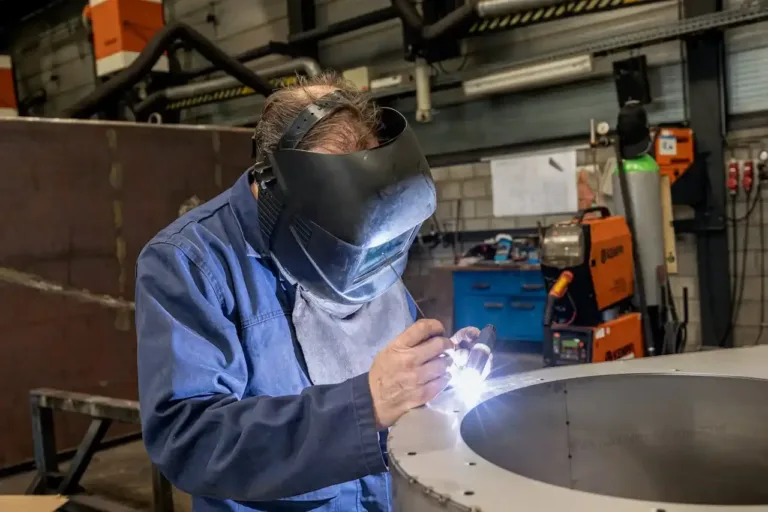
The work of a maintenance technician centres on the fact that it keeps buildings, equipment and essential systems working by inspecting, repairing and preventing faults. In plain English, a good maintenance technician helps projects move from plan to reality without avoidable delays, poor standards or preventable extra cost. For employers, that means better delivery. For clients, it usually means safer, smoother and more dependable results.
When maintenance slips, downtime climbs. A capable technician protects safety, reliability and the daily running of sites people depend on. That is why employers usually look for more than basic enthusiasm. They want someone who can follow a method, communicate properly and keep quality high when the day gets busy. A strong maintenance technician often becomes the person others rely on because the job touches timing, coordination and finished outcomes.
Working as a maintenance technician can suit school leavers, career changers, practical graduates and experienced workers moving sideways from related trades or site roles. It works well for practical troubleshooters who enjoy fixing issues, learning systems and moving between hands-on tasks. If you like work that has real-world consequences and clear progress, this career has plenty to offer.
What Does a Maintenance Technician Do?
A Maintenance Technician works close to the point where plans, materials, people and deadlines meet. On some days the job is about steady routine and proper checks. On others it is about making quick, sensible decisions when something changes. Either way, the purpose stays consistent: keep the work moving, keep standards up and make sure the final outcome is fit for use.
That broad description hides quite a lot of detail. A Maintenance Technician needs to understand the tools, methods and expectations of the role well enough to deliver dependable work without constant supervision. In most settings, employers value people who can combine technical understanding with judgement, because instructions on paper rarely match real conditions perfectly.
There is also a business side to the role. Better output, fewer mistakes, stronger communication and cleaner handovers all save money. That is one reason maintenance technician jobs can lead to better pay and more responsibility over time. The work has a direct effect on delivery, client confidence and long-term reputation.
Main Responsibilities of a Maintenance Technician
The exact task list changes from one employer to another, but most maintenance technician positions include the same core responsibilities.
- Inspect plant, equipment and building systems to catch wear, leaks or faults early.
- Carry out reactive repairs on mechanical, electrical or general building issues within competence.
- Complete planned preventative maintenance so systems last longer and fail less often.
- Keep service records and report recurring defects that need deeper intervention.
- Coordinate with contractors, suppliers and site managers when specialist work is required.
- Respond to breakdowns quickly and prioritise jobs based on operational impact and safety.
When those responsibilities are handled well, the result is bigger than a tidy checklist. Better coordination, fewer mistakes and stronger quality all feed into business goals such as profitability, programme certainty, client satisfaction and repeat work.
A Day in the Life of a Maintenance Technician
A maintenance day rarely stays exactly as planned. There may be a list of scheduled checks in the morning and a fault call by mid-morning.
Technicians move between routine servicing, fault-finding and small repairs, often across several parts of one site.
One hour might involve changing parts or testing an HVAC control, the next could be dealing with lighting, pumps or a damaged fixture.
A strong technician keeps notes properly, because patterns in small faults usually tell a bigger story over time.
The role feels satisfying when systems keep running smoothly and people barely notice the work behind that reliability.
No two employers run the role in exactly the same way. A smaller firm may ask for more flexibility and faster switching between tasks. A larger company may offer more structure, clearer systems and a narrower definition of the job. Either way, good habits tend to look similar: preparation, communication, steady quality and enough self-discipline to finish the basics properly.
Where Does a Maintenance Technician Work?
Maintenance Technician jobs can be found in several settings, depending on whether the work is more site-based, workshop-based, office-led or customer-facing. Common environments include the following.
- Commercial buildings and office estates
- Factories, warehouses and logistics sites
- Hospitals, schools and public buildings
- Hotels, retail centres and leisure venues
- Residential blocks or mixed-use developments
Some employers offer a stable routine in one location. Others involve travel, changing projects or a bigger mix of indoor and outdoor work. That working pattern is worth checking before you commit, because it shapes daily satisfaction more than the job title alone.
Skills Needed to Become a Maintenance Technician
Most employers want more than raw enthusiasm. They want proof that you can do the work safely, consistently and without creating extra problems for the rest of the team. That usually means a blend of hard and soft skills.
Hard Skills
Hard skills are the technical abilities that let a maintenance technician perform the role to a proper standard. They are the things employers can test, observe or ask you to demonstrate.
- Fault-finding: Good diagnosis saves time and stops unnecessary part changes.
- Basic electrical and mechanical competence: Maintenance crosses different systems, so broad technical confidence matters.
- Planned maintenance routines: Preventative work is what keeps breakdowns from dominating the schedule.
- Record keeping: Clear logs help with compliance, recurring issues and handovers.
- Health and safety awareness: Maintenance often means working around live systems, access equipment and occupied buildings.
Soft Skills
Soft skills are just as important because the work rarely happens in isolation. Even highly technical jobs depend on judgement, communication and personal reliability.
- Prioritisation: You need to judge what is urgent, what can wait and what requires escalation.
- Dependability: Sites rely on maintenance people to show up and sort problems properly.
- Communication: Explaining faults in simple language helps managers and users make decisions.
- Composure: Breakdowns can put people under pressure, so a calm technician is valued.
- Curiosity: The best technicians keep learning how systems work rather than just swapping parts.
Education, Training, and Qualifications
There is no single route into Maintenance Technician. Some people come through formal study, others through apprenticeships, and quite a few by building practical experience around a related trade or junior role. The strongest path is usually the one that combines recognised learning with real exposure to the work.
- Common starting points include engineering, building services or maintenance-related college courses.
- Apprenticeships are one of the strongest entry routes because they combine practical work with structured learning. For broader career planning and route-mapping, the National Careers Service careers advice pages are a useful place to compare options and next steps.
- Trade qualifications in electrical, mechanical or HVAC disciplines can be especially useful.
- Manufacturer training and site-specific compliance courses often build progression.
- Experience from facilities, production, armed forces engineering or technical support can transfer well.
Qualifications help, but employers also look closely at attitude, reliability and whether you can handle the pace and standards of the real job. In trade and construction-adjacent roles, practical credibility still carries a lot of weight.
How to Become a Maintenance Technician
Most people build towards the role step by step rather than landing in it by accident.
- Learn what the job really involves by reading vacancies, comparing employers and speaking to people already working as a maintenance technician.
- Choose an entry route that matches your background, such as college, an apprenticeship, direct junior work or a sideways move from a related role.
- Build the core technical skills and collect any certifications, cards or role-specific credentials employers expect.
- Get practical experience, even if that begins with assisting, shadowing or taking on narrower responsibilities first.
- Keep records of what you have done, whether that means project examples, photos of work, supervisor feedback or measurable results.
- Apply for roles that match your current level, then keep learning on the job so you can move towards better pay and wider responsibility.
Maintenance Technician Salary and Job Outlook
A review of Jobs247 salary data, based on pay patterns seen across roles advertised over the last 12 months, places the typical maintenance technician range at roughly £28,000 to £40,000 a year, with a midpoint of about £34,000. That midpoint is not a promise. It is a practical marker drawn from recent market activity and is best read as a useful guide rather than a guaranteed offer.
Pay moves for familiar reasons: location, employer type, project complexity, certification level, sector demand and how much responsibility sits in the role. London and the South East can sometimes pay more, but those gains may be softened by travel costs, parking, tools, accommodation or a generally higher cost of living. Some roles also rise in value when they sit inside shortage areas or demand a specialist skill set that is hard to replace.
Job outlook for maintenance technician work is usually strongest when employers still need dependable people who can either produce high-quality work, keep systems running or protect project performance. The wider market will always shift a bit with construction cycles, property activity, maintenance demand and public investment. Still, capable workers with a good reputation tend to stay employable because businesses remember the people who solve problems rather than create them.
If you want wider context on how occupations, qualifications and progression routes are described across the UK jobs market, Prospects job profiles are worth browsing alongside live vacancies. Used together with recent hiring data, that kind of comparison gives a more grounded picture than one salary headline on its own.
Maintenance Technician vs Similar Job Titles
Maintenance Technician overlaps with a few neighbouring jobs, but the emphasis changes depending on whether the work is more practical, more commercial, more design-led or more management focused. Looking at those nearby roles can help you decide whether this is the right lane for you.
Maintenance Technician vs Facilities Technician
A facilities technician often sits closer to whole-building support, while a Maintenance Technician may spend more time on direct repair and upkeep work.
- Main focus: Maintenance Technician centres more on its own core discipline, while Facilities Technician puts more weight on its specialist area.
- Level of responsibility: Responsibility differs by employer, but Maintenance Technician usually owns the priorities tied most closely to its own workstream.
- Typical work style: Maintenance Technician tends to follow the rhythms of its field, while Facilities Technician often works to a different mix of site, office or client demands.
- Best fit for: Choose Maintenance Technician if its day-to-day duties appeal more than the narrower or broader focus of Facilities Technician.
In practice, people sometimes move between these jobs over time, but the better choice is usually the one whose daily routine feels right to you now.
Maintenance Technician vs Electrician
An electrician specialises in electrical systems, while a Maintenance Technician usually has a wider but less specialist technical spread.
- Main focus: Maintenance Technician centres more on its own core discipline, while Electrician puts more weight on its specialist area.
- Level of responsibility: Responsibility differs by employer, but Maintenance Technician usually owns the priorities tied most closely to its own workstream.
- Typical work style: Maintenance Technician tends to follow the rhythms of its field, while Electrician often works to a different mix of site, office or client demands.
- Best fit for: Choose Maintenance Technician if its day-to-day duties appeal more than the narrower or broader focus of Electrician.
In practice, people sometimes move between these jobs over time, but the better choice is usually the one whose daily routine feels right to you now.
Maintenance Technician vs HVAC Technician
HVAC technicians focus on climate-control systems, whereas maintenance technicians cover a broader mix of site issues.
- Main focus: Maintenance Technician centres more on its own core discipline, while HVAC Technician puts more weight on its specialist area.
- Level of responsibility: Responsibility differs by employer, but Maintenance Technician usually owns the priorities tied most closely to its own workstream.
- Typical work style: Maintenance Technician tends to follow the rhythms of its field, while HVAC Technician often works to a different mix of site, office or client demands.
- Best fit for: Choose Maintenance Technician if its day-to-day duties appeal more than the narrower or broader focus of HVAC Technician.
In practice, people sometimes move between these jobs over time, but the better choice is usually the one whose daily routine feels right to you now.
Is a Career as a Maintenance Technician Right for You?
The best career choices are usually made by looking past the job title and paying attention to the actual routine. Ask yourself whether the daily demands of the role fit your temperament, not just whether the title sounds appealing.
- This role may suit you if… You enjoy fixing problems and spotting the cause, not just the symptom.
- This role may suit you if… You like variety and do not mind interruptions to the plan.
- This role may suit you if… You are practical, organised and reasonably calm under pressure.
- This role may not suit you if… You want a purely desk-based or highly predictable role.
- This role may not suit you if… You dislike troubleshooting or hands-on fault diagnosis.
- This role may not suit you if… You struggle to switch between different tasks quickly.
There is nothing wrong with discovering that a nearby role fits you better. In fact, that is one of the most useful outcomes of doing this kind of research properly. The point is not to force yourself into a title. It is to find work whose day-to-day pattern you can grow in.
Final Thoughts
Maintenance Technician is a practical career path with room for progression, deeper skill and stronger earnings when the fundamentals are done well. If the mix of responsibility, hands-on judgement and visible results appeals to you, it is well worth exploring further. Start with the real routine, not the headline. When the day-to-day work suits you, the career usually has a much better chance of lasting.
Frequently Asked Questions about the Maintenance Technician
Frequently Asked Questions
What does a Maintenance Technician do every day?
Maintenance Technicians usually spend the day planning, checking, communicating and carrying out the core duties of the role in a live working environment. The exact mix changes by employer and project, but the aim stays the same: get the work done safely, accurately and to a proper standard.
What skills does a Maintenance Technician need?
A Maintenance Technician needs a mix of technical ability, practical judgement and reliable communication. Employers usually look for someone who can handle the core tools, standards or systems of the job while also staying organised and easy to work with.
How do you become a Maintenance Technician?
Most people become a maintenance technician through a mix of training, recognised qualifications and hands-on experience. Depending on the role, that may mean an apprenticeship, college study, direct entry into a junior post or a move across from a related trade.
Is Maintenance Technician a good career?
Maintenance Technician can be a good career for people who like responsibility, practical progress and steady skill development. Pay, workload and progression vary, but strong people in the role are usually valued because the work has a clear impact on results.
What is the difference between a Maintenance Technician and an SEO Specialist?
A Maintenance Technician works in a completely different field from an SEO Specialist. An SEO Specialist improves website visibility and search performance, while a maintenance technician focuses on the practical, technical or commercial work involved in delivering buildings, property or site operations.