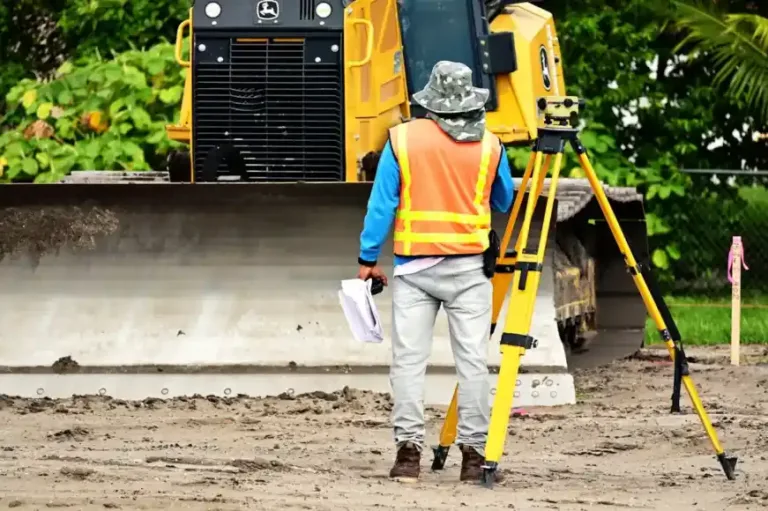
In practical terms, the job revolves around one thing: a Site Engineer translates drawings and specifications into real positions, levels and checks on site so the build matches the design. Site engineers help stop expensive mistakes before concrete is poured or structures go up in the wrong place. That means the job sits closer to the real outcome of a project than many people realise. On a good day, you are not just completing tasks; you are protecting quality, timing, safety and the client experience all at once.
That is why employers value the role. A strong site engineer brings order to busy work, spots problems early and makes the next stage easier for everyone else. When things go wrong on site or in delivery, the cause is often less dramatic than people think: missed details, weak coordination, rushed decisions or a lack of follow-through. This role helps stop that drift.
For career changers, school leavers, graduates or experienced workers looking for something more grounded, the role can be appealing because it mixes practical judgement with clear responsibility. It is usually a good match for people who like technical detail, measurements, problem-solving and being out on site rather than in a purely office role. It often appeals to people who want a career that feels grounded rather than abstract.
What Does an Site Engineer Do?
Site Engineer work usually centres on planning the task, checking the conditions, getting the right people or materials in place, and then seeing the job through properly. The title changes from employer to employer, but the basic purpose stays fairly steady: keep the work accurate, safe and useful.
That can mean spending part of the day on site, part in a cabin or office, and part talking to suppliers, clients, subcontractors or colleagues. Some employers lean heavily on the technical side. Others want someone who can juggle people, paperwork and physical delivery. Either way, the role is far more than a job title on a hi-vis vest or email signature.
There is also a quiet commercial side to the work. When a site engineer gets details right first time, waste drops, delays shrink and handover tends to go more smoothly. You can usually tell the value of the role when it is missing.
Main Responsibilities of an Site Engineer
A good site engineer keeps the day from unravelling. The exact mix varies by employer, but most jobs include responsibilities like these:
- Reviewing the work scope and deciding what has to happen first rather than charging in cold.
- Checking site, building, roof, land or project conditions before key decisions are made.
- Coordinating with managers, clients, residents, subcontractors or suppliers so expectations stay clear.
- Preparing or following work plans, drawings, checklists, measurements or technical instructions.
- Watching quality closely and picking up defects before they become expensive callbacks.
- Keeping safety controls visible in the real working environment, not just on paper.
- Recording progress, snags, variations or findings so the next person has something solid to work from.
- Helping solve practical problems when conditions on the ground do not match the neat version in the original plan.
Taken together, those duties link directly to business results. Better coordination means fewer hold-ups. Better judgement means less rework. Better standards mean happier clients and cleaner margins.
A Day in the Life of an Site Engineer
No two days are identical, but there is still a rhythm to the work. Many site engineer jobs begin with a review of priorities: what needs checking, what has changed overnight, which team or area needs attention first and where the biggest risk of delay sits.
From there, the work tends to swing between active oversight and practical problem-solving. You may inspect a work area, brief a crew, review a drawing revision, chase missing information, confirm materials, respond to a fault or speak with a client who wants a straight answer rather than a glossy one.
By midday the role often becomes about balance. You are trying to keep work moving while still protecting standards. That might mean slowing one decision down to avoid a bigger mistake later, or pushing something forward because everyone has what they need and the window is there.
Later in the day there is usually follow-up: notes, actions, handovers, snag items, emails, updates or preparation for the next shift. That admin side is not glamorous, but it is part of what separates a dependable site engineer from someone who is just busy.
Where Does an Site Engineer Work?
Site Engineer roles show up in more places than many people expect. Some are heavily site-based, others blend field work with planning or reporting.
- Civil engineering and infrastructure schemes.
- Groundworks, roads and drainage packages.
- Commercial towers and complex structural frames.
- Housing and mixed-use developments.
- Utilities, rail and energy projects.
- Site cabins, survey zones and active work fronts.
Skills Needed to Become an Site Engineer
Hard Skills
Hard skills are the practical and technical abilities that let a site engineer do the work to a proper professional standard.
- Setting out: Precise coordinates and levels keep structures, drainage and services where the design says they should be.
- Drawing interpretation: You need to read plans, sections and revisions quickly or site teams end up working from the wrong information.
- Survey instruments: Confidence with total stations, GPS equipment and levels is a core part of the job.
- Quality checks: Engineers record measurements, tolerances and as-built details so defects are caught early.
- Technical problem-solving: Real ground conditions and site clashes rarely match drawings perfectly, so practical engineering judgement counts.
- Documentation: RFI notes, test records and technical reports need to be clear because others rely on them.
Soft Skills
Soft skills matter just as much because the role rarely happens in isolation. You are normally working around deadlines, other people and imperfect information.
- Accuracy: Near enough is not good enough when dimensions affect foundations, steel or drainage runs.
- Communication: Engineers constantly explain details to supervisors, subcontractors and design teams.
- Time management: You may be setting out one area, checking another and chasing revised information at the same time.
- Curiosity: The best site engineers ask questions before an error becomes concrete, literally.
- Confidence: You sometimes need to challenge assumptions or stop work until a detail is confirmed.
- Adaptability: Programmes shift, weather interferes and site priorities change fast.
Education, Training, and Qualifications
There is no single route into site engineer work. Some people come through apprenticeships or trade backgrounds, some through college and some through university or graduate pathways. Employers usually care most about whether you can handle the responsibilities in real conditions.
- Degrees: Relevant higher education can help, especially for employers hiring into technical, planning or surveying-led routes.
- Certifications: Short courses, site safety credentials and specialist certificates often make a big difference to employability.
- Portfolios or evidence of work: Photos, reports, drawings, project examples or case summaries can show what you have actually done.
- Practical experience: Site exposure, shadowing, placement work or assistant roles often teach more than a purely classroom route.
- Transferable backgrounds: People often move in from related trades, engineering support, project admin, compliance or maintenance roles.
The strongest candidates usually combine some formal learning with proof they can operate in the real world. Employers like theory, but they hire delivery.
How to Become an Site Engineer
If you want to become an Site Engineer, the safest route is to build the basics first and then add responsibility in stages.
- Build strong technical grounding in drawings and measurement.
- Learn surveying equipment properly.
- Gain site exposure through placements or assistant roles.
- Take ownership of small setting-out packages.
- Improve record keeping and qa routines.
- Develop confidence in coordination meetings.
- Move into senior engineer or project engineering routes.
That kind of progression gives you something more useful than a nice-looking CV. It gives you judgement, which is what employers end up paying for.
Site Engineer Salary and Job Outlook
Based on Jobs247 salary evidence gathered from roles advertised during the past year, the market picture comes out at roughly £43,000 to £72,500, with a midpoint near £57,750.
Pay is shaped by experience, location, project complexity and whether the employer needs someone who can work independently from day one. London and the South East may offer stronger rates in some cases, but specialist experience, travel requirements and the type of employer can matter just as much.
People researching routes into the job often use the National Careers Service careers explorer to compare entry paths, qualifications and typical progression options. It is a sensible starting point, especially if you are deciding between several related roles.
For this role, earnings usually improve once you can take responsibility with less supervision, deal with awkward jobs calmly and produce work that does not need constant correction.
For a wider sense of sector movement, Prospects’ property and construction overview is useful because it shows how built-environment careers connect across projects, employers and training routes. Outlook depends less on hype and more on how consistently these skills are needed in real projects.
Site Engineer vs Similar Job Titles
Site Engineer can sit close to several neighbouring job titles, which is why reading adverts properly matters. A similar-sounding role may require a different background, a different certification route or a different kind of daily pressure.
Site Engineer vs Surveyor
Surveying relies heavily on inspection, measurement and professional reporting, while this role has a different decision-making frame.
- Main focus: Site Engineer work is centred on engineering-related delivery, judgement and coordination.
- Level of responsibility: It usually carries direct accountability for standards, decisions or follow-through in its own area.
- Typical work style: Most employers expect a mix of live problem-solving, communication and practical oversight.
- Best fit for: People who like a good match for people who like technical detail, measurements, problem-solving and being out on site rather than in a purely office role.
There is some overlap, but the focus and pressure points are not the same. That matters when you are applying for jobs, because a better title match usually leads to better interviews and less wasted time.
Site Engineer vs Site Manager
Site managers oversee broader day-to-day site delivery, while this role is usually more specialised or focused on one area of work.
- Main focus: Site Engineer work is centred on engineering-related delivery, judgement and coordination.
- Level of responsibility: It usually carries direct accountability for standards, decisions or follow-through in its own area.
- Typical work style: Most employers expect a mix of live problem-solving, communication and practical oversight.
- Best fit for: People who like a good match for people who like technical detail, measurements, problem-solving and being out on site rather than in a purely office role.
The titles can overlap on casual conversation, but the day-to-day emphasis is different. That matters when you are applying for jobs, because a better title match usually leads to better interviews and less wasted time.
Site Engineer vs Quantity Surveyor
Quantity surveyors are more commercially focused, while this role is usually driven by delivery, technical checks or field activity.
- Main focus: Site Engineer work is centred on engineering-related delivery, judgement and coordination.
- Level of responsibility: It usually carries direct accountability for standards, decisions or follow-through in its own area.
- Typical work style: Most employers expect a mix of live problem-solving, communication and practical oversight.
- Best fit for: People who like a good match for people who like technical detail, measurements, problem-solving and being out on site rather than in a purely office role.
They may sound similar on paper, yet employers usually separate them quite clearly. That matters when you are applying for jobs, because a better title match usually leads to better interviews and less wasted time.
Is a Career as an Site Engineer Right for You?
Whether site engineer is right for you depends on how you like to work, what kind of responsibility you want and whether you enjoy decisions with visible consequences.
This role may suit you if…
- You like practical work with a clear outcome rather than vague tasks that drift on for days.
- You are comfortable dealing with people, priorities and the occasional awkward problem in real time.
- You take standards seriously and do not mind being the person who notices what others missed.
- You want a role where experience genuinely improves both confidence and pay.
This role may not suit you if…
- You strongly prefer quiet desk work with minimal interruptions.
- You dislike follow-up, site pressure or being accountable for quality and timing.
- You want a role with very little variation from one day to the next.
- You are not interested in learning the technical side properly and steadily.
Final Thoughts
For the right person, it offers a career that feels tangible. You can point to the result of your work and say, fairly, I helped make that happen. A strong site engineer builds value over time because the work teaches judgement, timing, standards and how to handle pressure without rushing into silly mistakes.
If the mix of technical detail, real-world delivery and responsibility appeals to you, site engineer work is well worth a serious look. It can be a stable route in its own right, and it can also open doors into supervision, specialist practice or broader project leadership later on.
Frequently Asked Questions about the Site Engineer
Frequently Asked Questions
What does an Site Engineer do every day?
Site Engineer work usually involves checking priorities, carrying out or coordinating live tasks, solving practical problems and keeping standards where they need to be. Most days combine hands-on decision-making with communication, follow-up and some form of record keeping.
What skills does an Site Engineer need?
A Site Engineer needs a mix of technical understanding, attention to detail, communication and sound judgement. Employers also look for reliability, safe working habits and the ability to deal calmly with changing conditions.
How do you become an Site Engineer?
People enter through several routes, including apprenticeships, site experience, college, university or related jobs. The strongest route is usually to learn the basics properly, gain real-world experience and then add qualifications or specialist training as needed.
Is Site Engineer a good career?
For many people it is, especially if they want practical responsibility, visible results and a role that can grow with experience. Pay and progression tend to improve once you can work with less supervision and handle more complex tasks confidently.
What is the difference between an Site Engineer and an SEO Specialist?
They are completely different jobs. A Site Engineer works in the built environment, property, planning or site delivery space, while an SEO Specialist focuses on website visibility, search traffic and digital content performance.